history and culture
INFORMATION
Lorenzo Bartolini (1777-1850), the greatest Italian
sculptor of the 19th century, used to live in this house from 1819 to 1850. A
commemorative plaque has been installed in 1873 on the façade of the building. In 1819 he hosted his friend and painter Jean
Auguste Dominique Ingres, with whom he shared the studio for a few years. In
1831 Bartolini had a villa built to his design in the center of the large
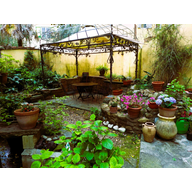
garden (just in front of your garden). The apartment where you are staying was used
by Bartolini as his home studio (his official studio was elsewhere). Bartolini’s
works are in museums all around the world. There is a large collection of his
plaster casts (gipsoteca) in the nearby Accademia Gallery.
SHINE by Sonny Cute (Stefano)
La fiducia in Dio di Lorenzo Bartolini. L'originale si trova all'Hermitage
ORIGINS AND CHARACTERISTICS OF THE BUILDING
Borgo Pinti is one of the oldest streets in Florence. Many buildings date back to the 13th -14th century, and many of them were small monasteries for nuns. The name Pinti in fact seems to derive from "pinte" (painted), i.e. prostitutes, who painted their faces and in old age became nuns, to retire to a convent. Another possible etymology of “Pinti” is that the word derives from "penitenti" (penitents) or “pentite” (repetants), or "repentite" (converted). The beautiful convent of Santa Maria Maddalena de' Pazzi located in Borgo Pinti was founded in 1250 in the place where there was already a shelter for repentant prostitutes, and its original name was "Santa Maria Maddalena delle Convertite" or "delle Penitenti".
Probably the building you are in also has this origin. The original vaulted walls are very old and large, as can be seen in the basement from the wood-burning oven (still working) built into the wall to the left of the stairs. If you remove the cover you can see the full depth of the wall. In the basement can also be recognized the circular space from which the shower was made: it was a well from which water was taken for the house. There are also traces of a second well, towards the garden (a third well, located in the large garden, is still working). Another peculiarity of the building is revealed by the stone column on the ground floor, which originally supported the portico. This means that over time the building has expanded and the external parts have become internal.
PRIVATE SPACES AND INTIMACY
The internal space does not correspond to the housing model that was imposed between the 18th and 19th centuries (500 years later), when the idea of a "private" Self emerged, a new type of family known as "nuclear" rose, and the new demand for privacy and intimacy through the separation of rooms has become established in bourgeois homes. This type of space reorganization is partly found on the upper floors of the building, which were subject to more frequent renovations. The type of space in this apartment does not allow a complete separation between rooms. In ancient times separation was done with curtains. This is what we also proposed. Obviously it is not the same type of privacy and intimacy born in the 19th century, since these are two very different concepts of living space. It can be a new experience to stay in an older type of space. The important thing is not to expect a modern apartment.
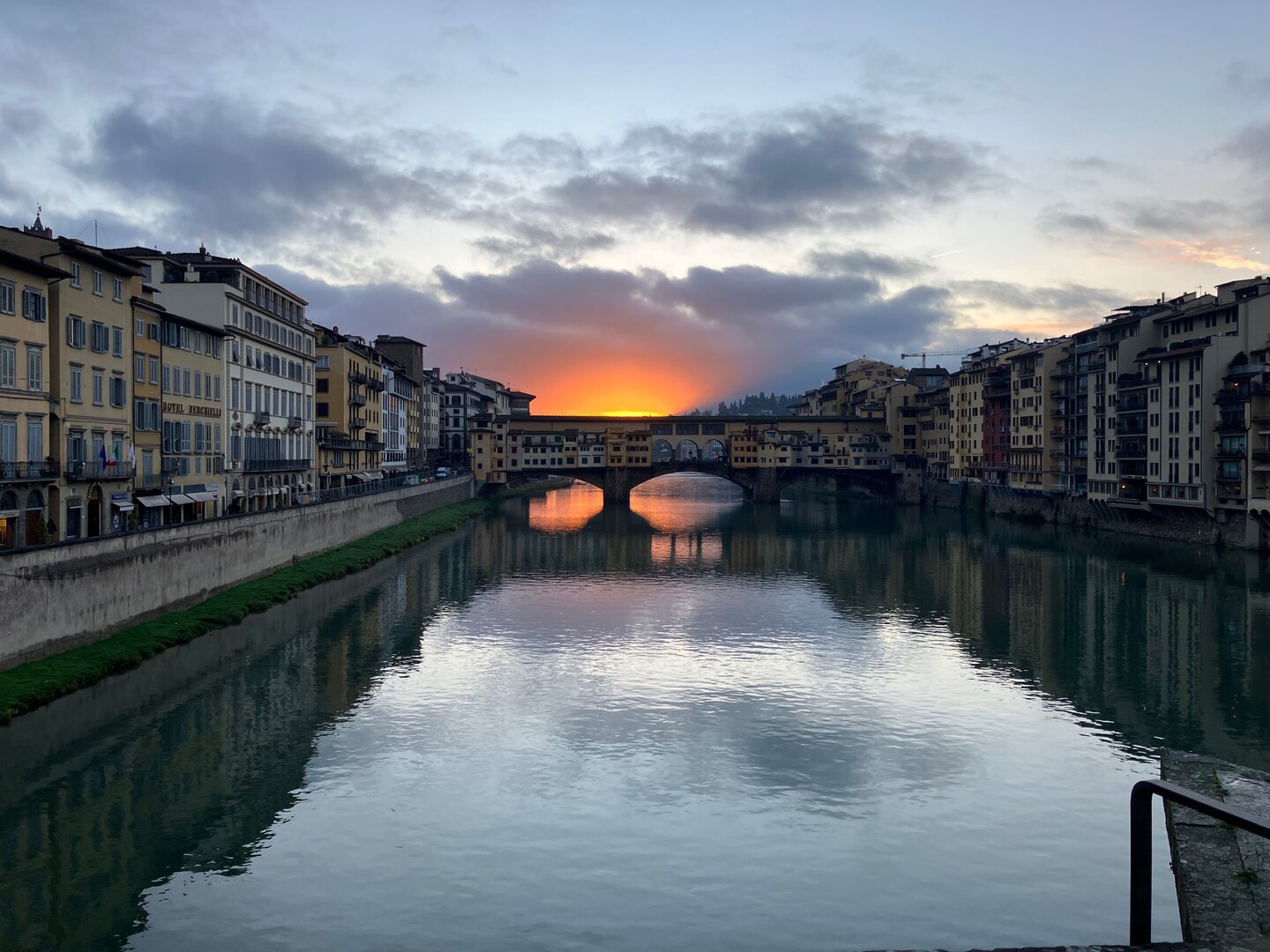
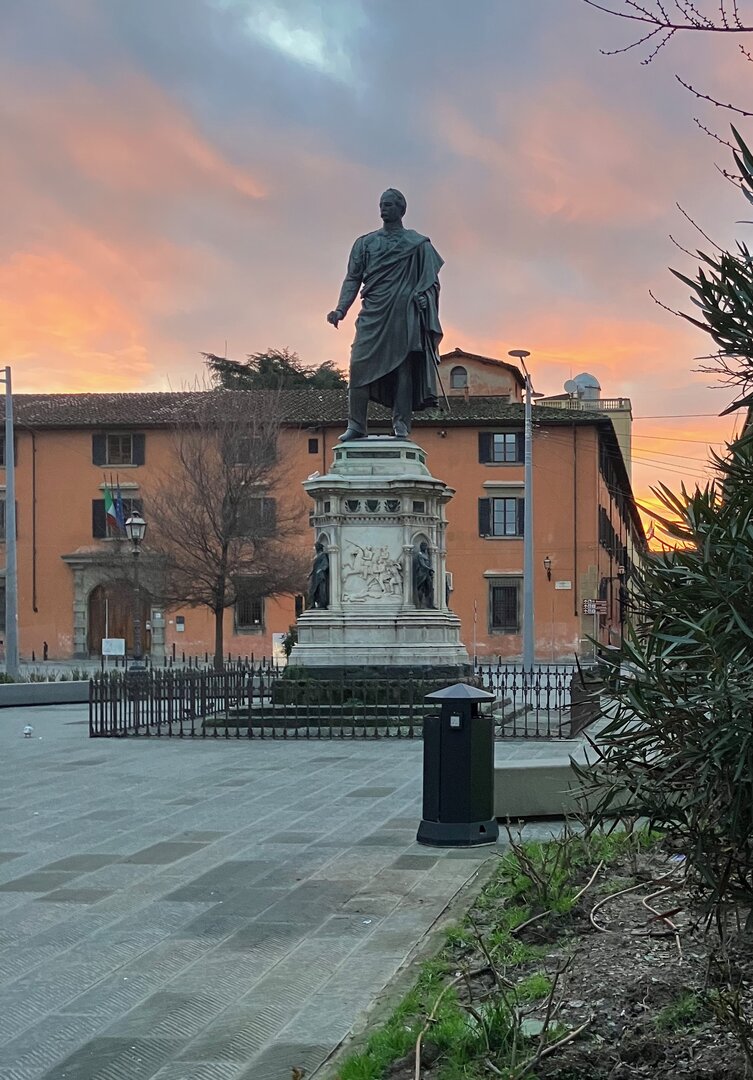
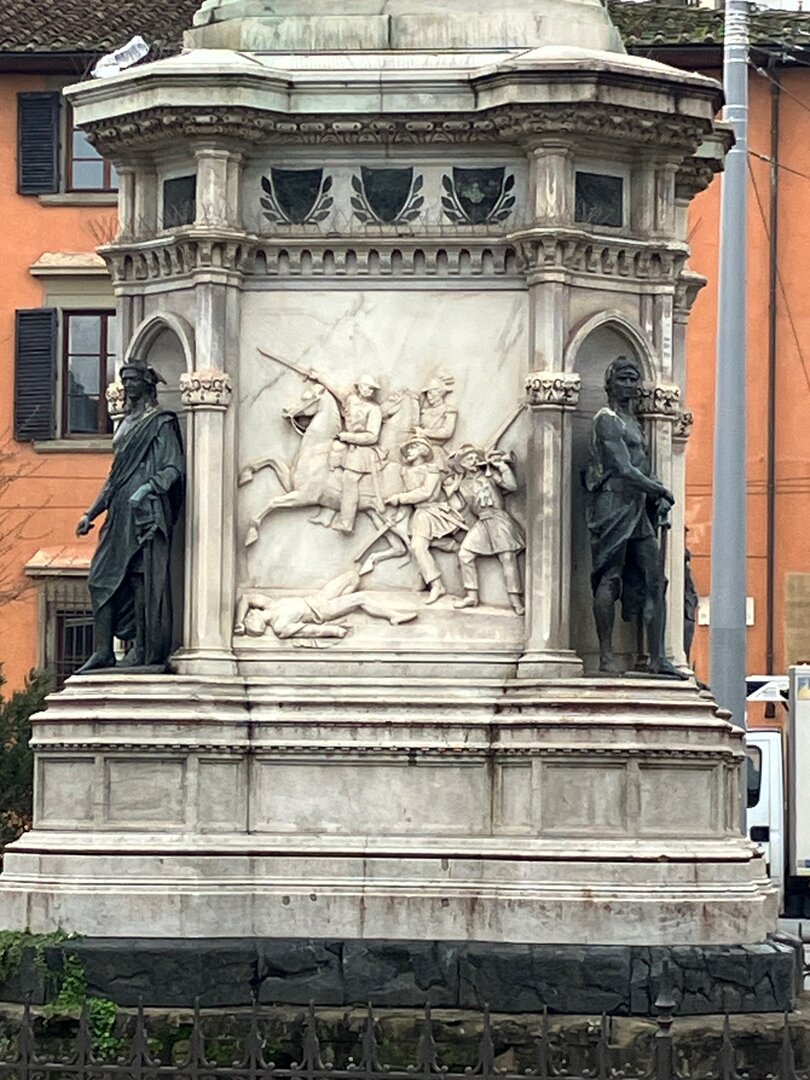
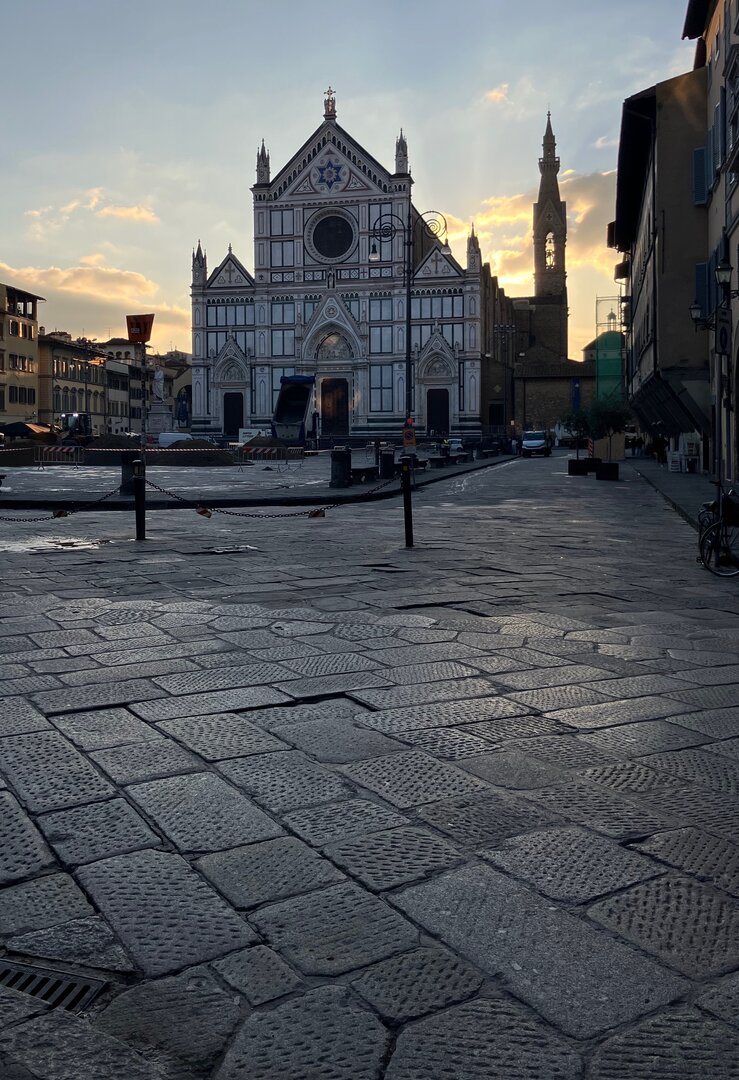
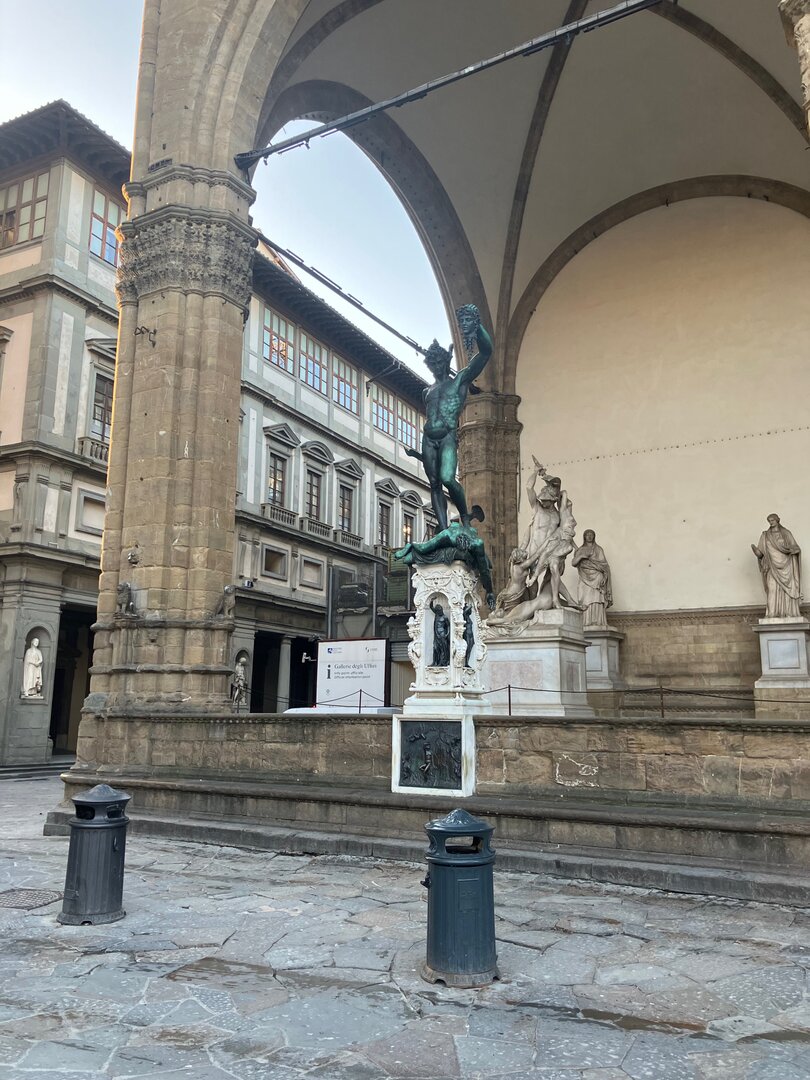
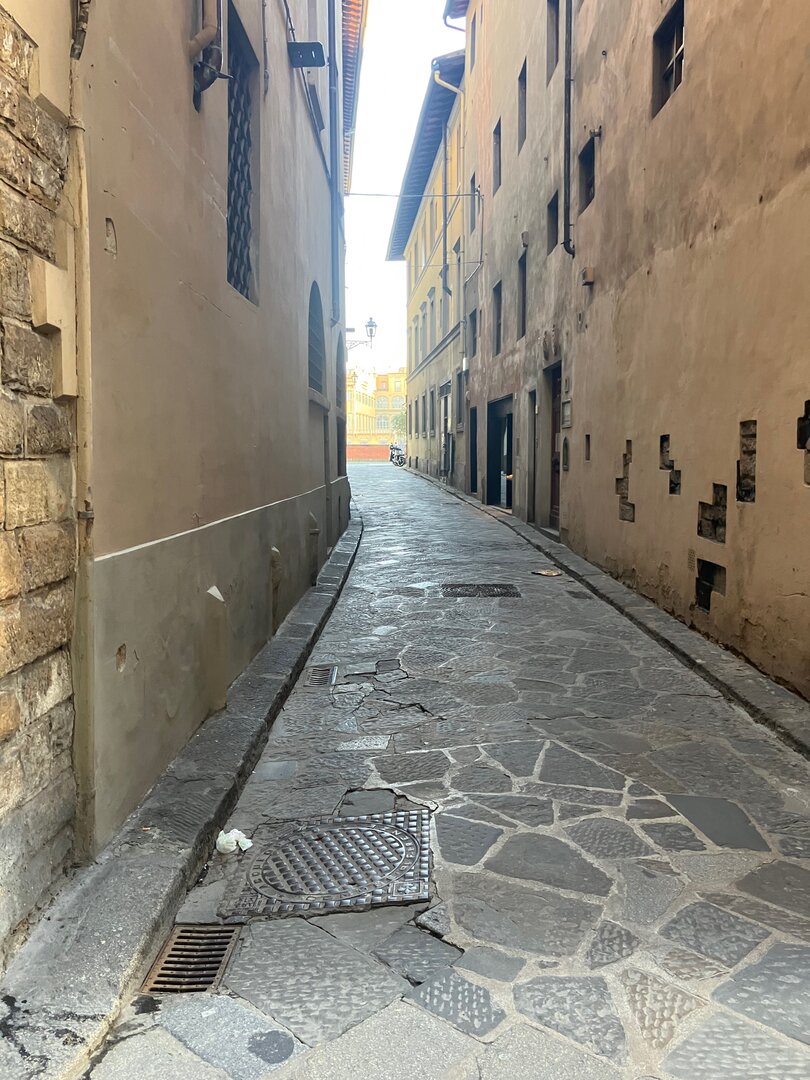
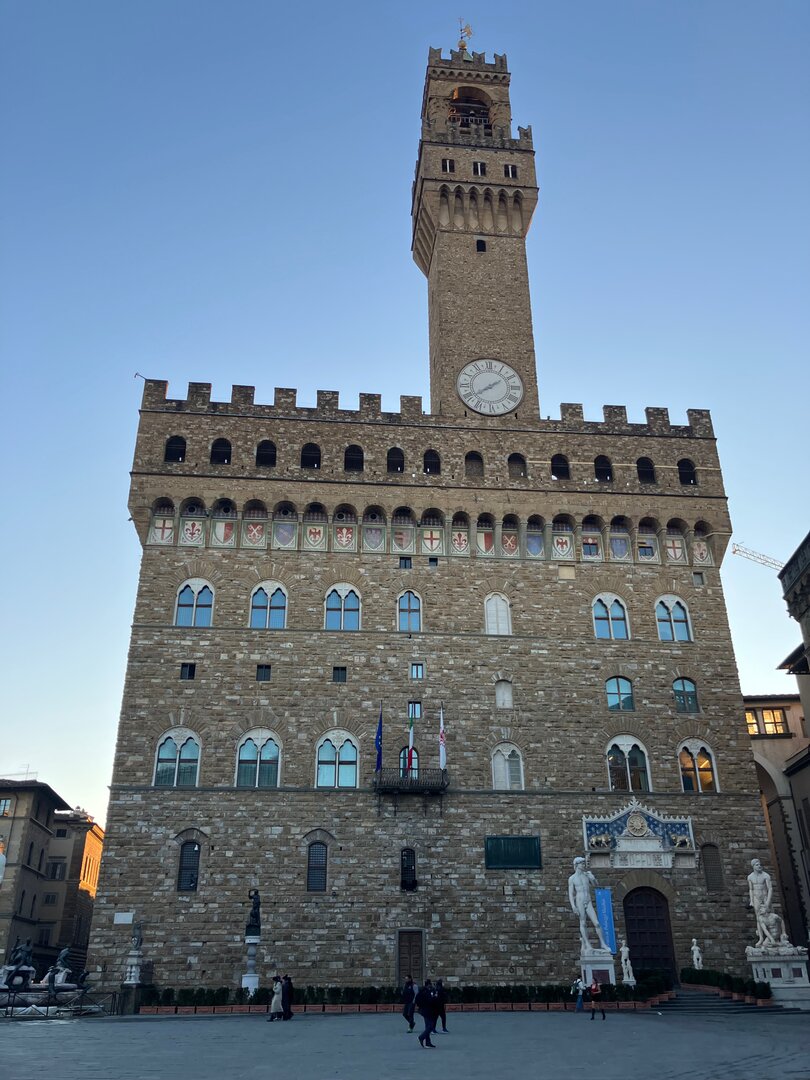
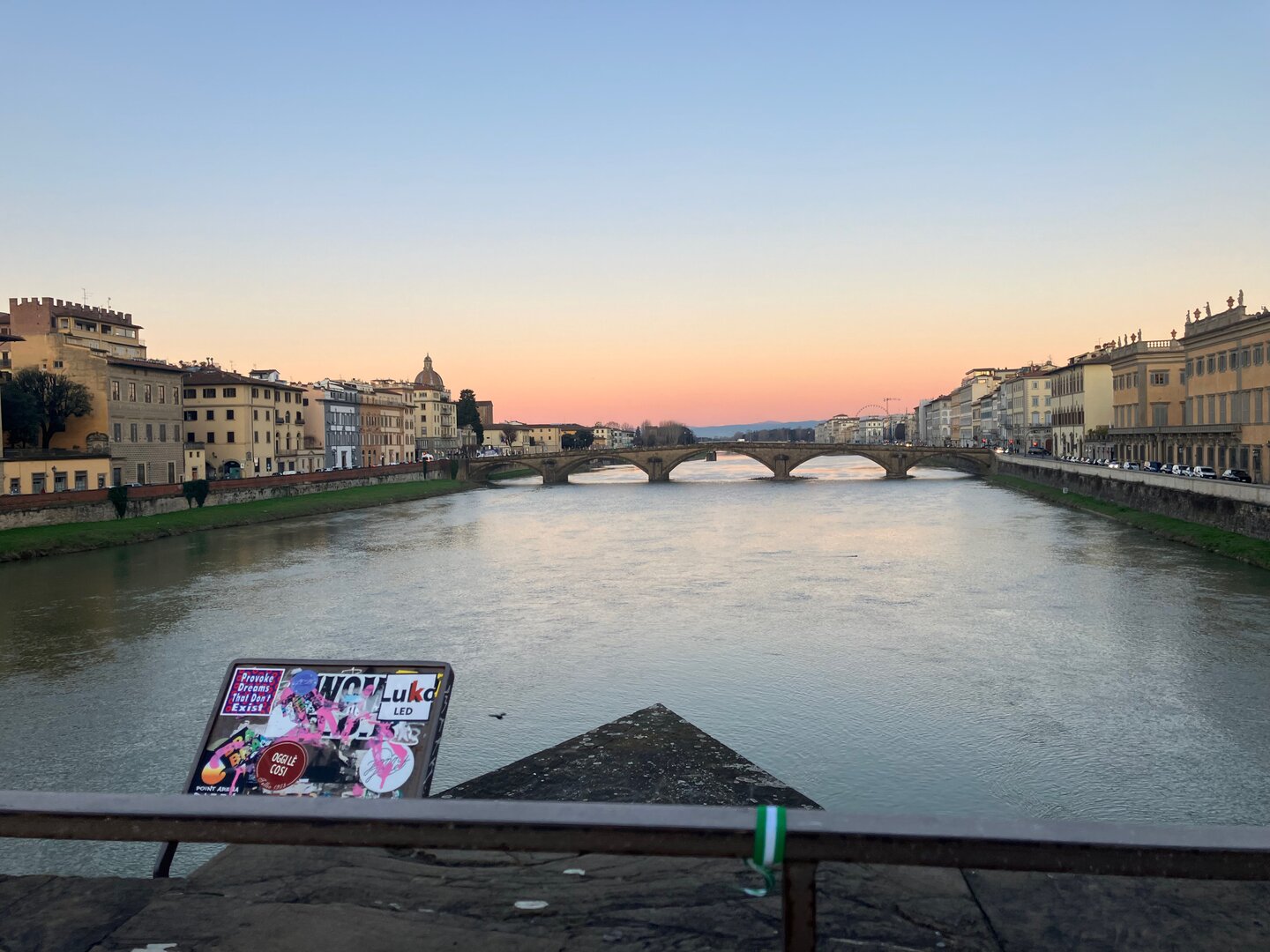
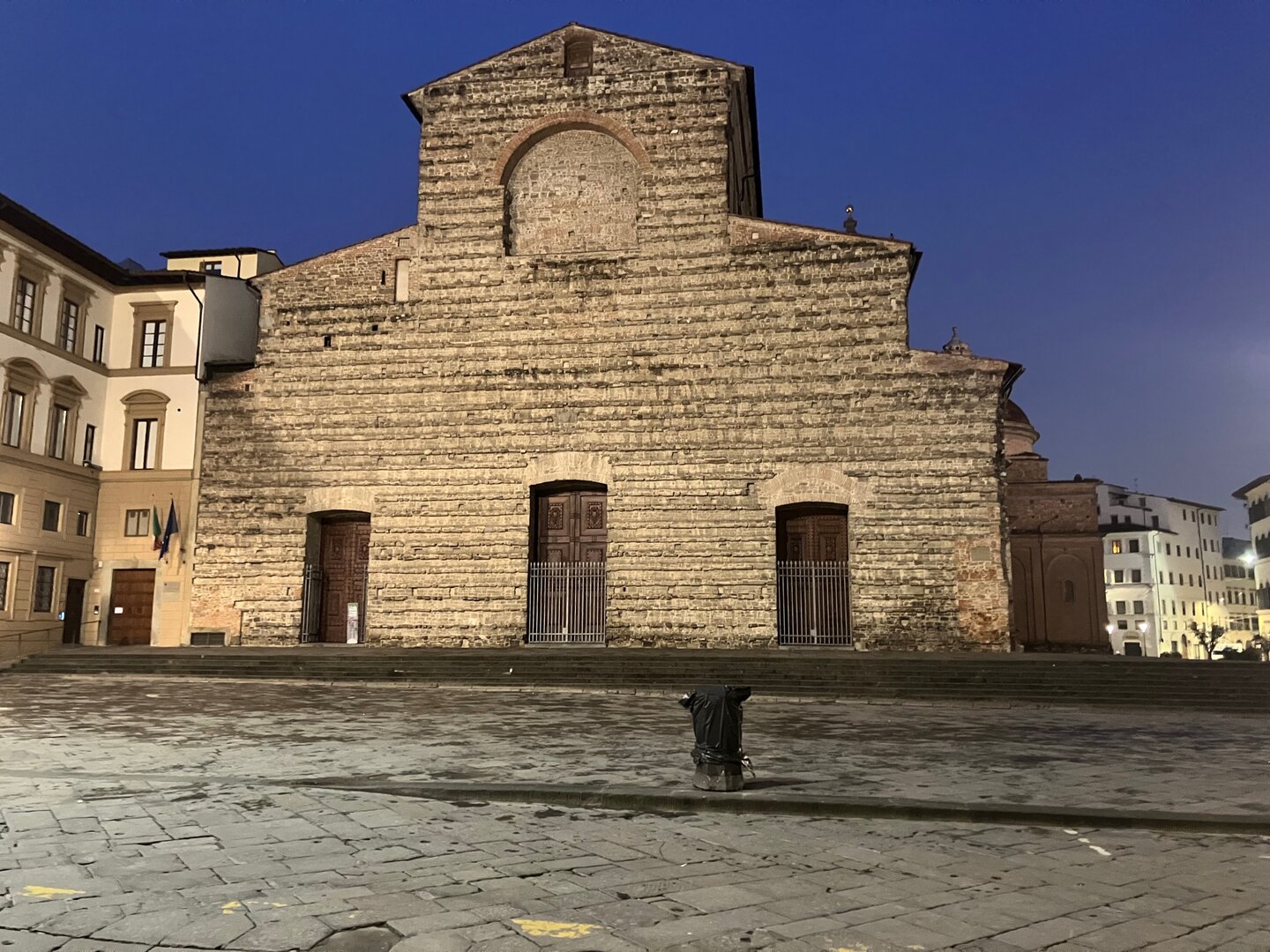
Images of Florence at dawn. Photo by Stefano